



Author
Prof Dr Paul Heidekrüger
Reading time min.
Reading time min.
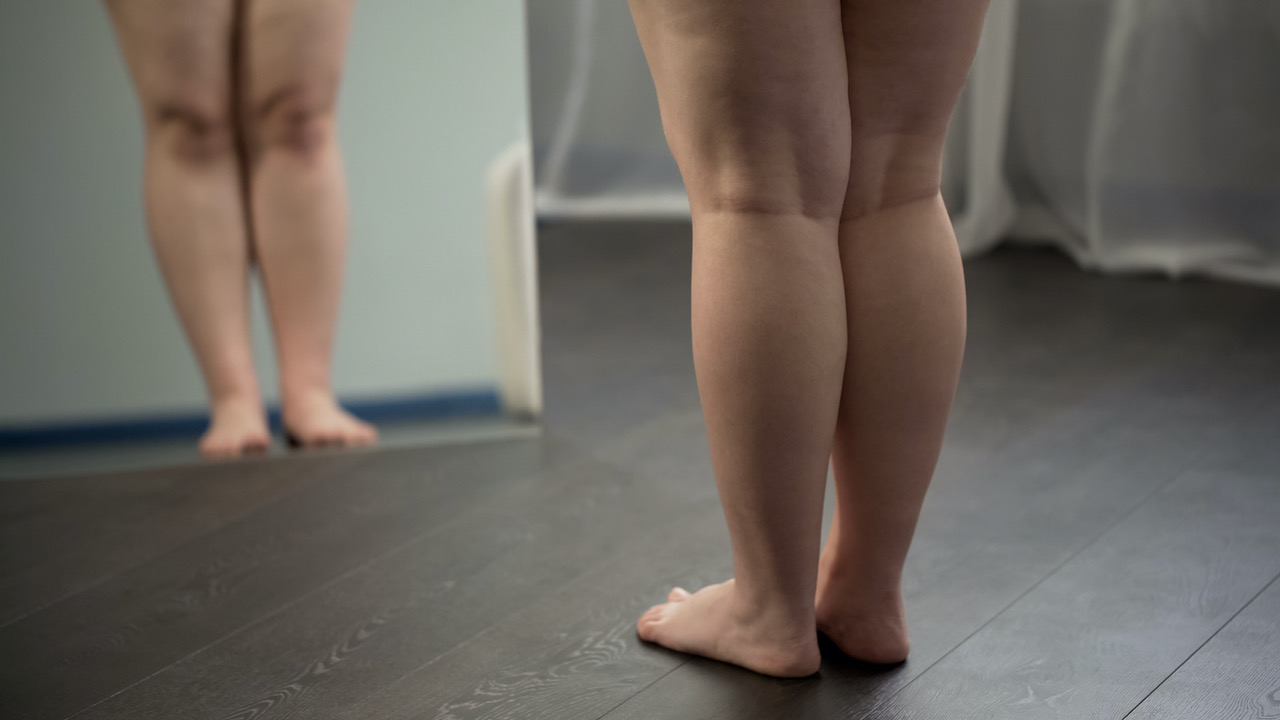
Many of our patients ask themselves the question: lipoedema or fat? But what is the right answer? In this article, we explain the difference between lipoedema and fat!
When the condition of lipoedema comes up, there are many stories of unhappy individuals looking for a proper diagnosis and being told they are just obese. This is an extremely unsatisfactory state of affairs, as there is a clear difference between normal fat and lipoedema fat tissue. Lipoedema fat tissue accumulates in an atypical form and in atypical places; a trained eye can recognise this relatively quickly and clearly. In principle, fatty tissue is used for long-term energy storage. Our organs, such as the liver and kidneys, need fat for proper metabolic function. One form of adipose tissue, known as visceral fat, is very active and sensitive to changes in calorie balance, while subcutaneous adipose tissue is located between the skin and muscle tissue and reacts less quickly to metabolic changes. It is this hormone-dependent subcutaneous fatty tissue, which is influenced by oestrogen and progesterone, that develops in women around the age of puberty and is largely responsible for the shape of the female body.
As mentioned above, untrained doctors may not recognise your condition as lipoedema and instead think it is simply obesity. People with lipoedema may lose weight overall and reduce the total amount of fat in their body. However, this change is significantly less than in people who are simply obese. The difference in weight loss is statistically different between people with and without lipoedema. For example, the fat tissue in the legs of people with lipoedema does not decrease significantly with diet and exercise, in contrast to people with obesity.
Another difference between people with lipoedema and those with obesity is the plasma glucose level. People with lipoedema have a slightly lower fasting blood glucose level than people with an identical BMI in obesity. In addition, patients with lipoedema have lower blood glucose levels after consuming drinks with a high glucose content than people with the same BMI and obesity. The difference in blood glucose levels only increases when slow weight loss is achieved.
Lipoedema is related to hormone-dependent subcutaneous fatty tissue. It mainly affects the arms/legs and can spread further throughout the body. It is currently not known why it affects certain areas of the body and not others. This type of adipose tissue is virtually unresponsive to weight management. Other fat deposits in the body are affected by weight loss, but not the hormone-dependent subcutaneous lipoedema fat tissue in the body.
With a Lipoedema can only be helped by a surgical Liposuction for lasting relief and causal treatment of the symptoms. If, on the other hand, it is „only“ a case of obese legs, liposuction can also be used to harmonise body proportions and mobility. However, the lifestyle should also be optimised in terms of diet and exercise.
We would be happy to advise you on this in a personal dialogue with our lipoedema doctors!

Your opinion is important to us!
We would be delighted if you would publish your experiences on one of the following pages:


©2026 zellfusion GmbH | Munich
You need to load content from hCaptcha to submit the form. Please note that doing so will share data with third-party providers.
More InformationYou need to load content from reCAPTCHA to submit the form. Please note that doing so will share data with third-party providers.
More InformationYou need to load content from reCAPTCHA to submit the form. Please note that doing so will share data with third-party providers.
More InformationYou need to load content from reCAPTCHA to submit the form. Please note that doing so will share data with third-party providers.
More InformationYou need to load content from Gymnastics styles to submit the form. Please note that doing so will share data with third-party providers.
More InformationYou are currently viewing a placeholder content from Instagram. To access the actual content, click the button below. Please note that doing so will share data with third-party providers.
More Information