



Author
Prof Dr Paul Heidekrüger
Reading time min.
Reading time min.
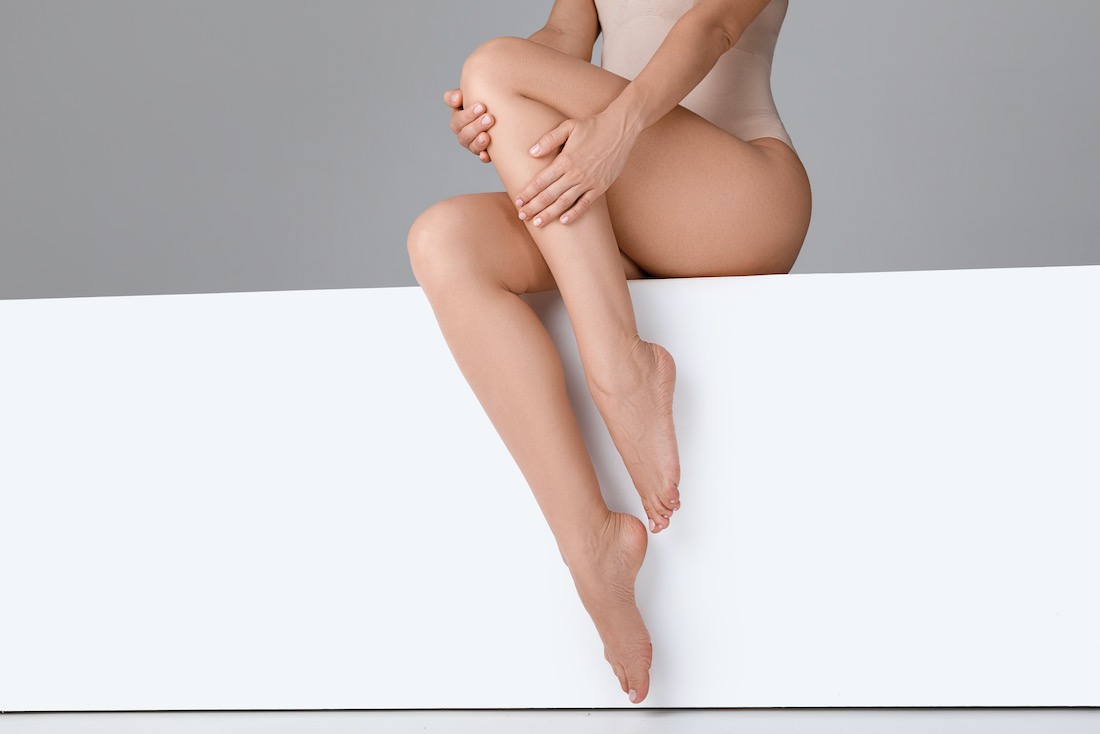
Lipoedema is an unpleasant condition in which fat cells grow uncontrollably. It is therefore an even greater relief for those affected when liposuction provides relief. But what should be done if the lipoedema returns after the operation?
Liposuction is regarded as an effective method of halting the progression of lipoedema or radically slowing its progression. During the procedure, diseased fat cells are permanently removed. The aim is to remove as many of the affected cells as possible, so that as far as possible only healthy cells remain, which change normally in contrast to the pathological lipoedema cells.
However, it is quite possible for lipoedema to return after surgery. This is due to the fact that not all of the fatty tissue affected by lipoedema can always be removed by liposuction. The remaining diseased cells - however few they may be - can continue to cause an increase in fatty tissue.
For safety reasons, surgical treatment is also subject to certain volume limits, whereby no more than 8-10 % of pure fatty tissue should be removed from the body weight during liposuction. This is another reason why lipoedema can recur after surgery. If a large amount of fatty tissue is involved, liposuction must be divided into several sessions. There must be an interval of at least 6 - 8 weeks between the procedures.
If lipoedema cells remain in the body after liposuction, they can continue to grow, but this happens very slowly. This is because there are significantly fewer diseased cells. In individual cases, lipoedema can reappear after an operation due to relapses and after some time. It can then be removed again by liposuction. In most cases, however, lipoedema does not return after surgery!
It is common practice to perform liposuction again in the case of lipoedema, which in rare cases returns after surgery. Here, as with the first procedure, the diseased fat cells are removed. Once removed, they cannot multiply any further. As a rule, however, a new liposuction is only necessary after 8-12 years in these cases.
If the Lipoedema after the OP is back, the first step should be a visit to the doctor treating you. Ideally, you should see the specialist who made the initial diagnosis or performed the procedure. Alternatively, another specialist doctor is also an option. In any case, it is important that the doctor has lymphological and surgical expertise in the specialist field and is aware of the problem of recurrent lipoedema. That way it can be treated well!

Your opinion is important to us!
We would be delighted if you would publish your experiences on one of the following pages:


©2026 zellfusion GmbH | Munich
You need to load content from hCaptcha to submit the form. Please note that doing so will share data with third-party providers.
More InformationYou need to load content from reCAPTCHA to submit the form. Please note that doing so will share data with third-party providers.
More InformationYou need to load content from reCAPTCHA to submit the form. Please note that doing so will share data with third-party providers.
More InformationYou need to load content from reCAPTCHA to submit the form. Please note that doing so will share data with third-party providers.
More InformationYou need to load content from Gymnastics styles to submit the form. Please note that doing so will share data with third-party providers.
More InformationYou are currently viewing a placeholder content from Instagram. To access the actual content, click the button below. Please note that doing so will share data with third-party providers.
More Information